As we navigate the vast and ever-expanding world of digital advertising, one term that you may come across frequently is CTR or click through rate. For those who are new to the world of online advertising, this term may seem confusing or even intimidating. But fear not! In simple terms, CTR simply refers to the percentage of people who click on an ad after seeing it. Understanding CTR can be incredibly valuable for anyone looking to optimize their digital marketing efforts and improve ROI. So if you’re ready to dive into the world of CTR and learn how it can impact your digital campaigns, keep reading!
1. Definition of CTR
Now that we’ve established what the click-through rate (CTR) is, let’s dive deeper into its definition. CTR is a ratio that measures the number of clicks on a specific link or call to action (CTA) against the number of impressions, or times the link or CTA was viewed. This measurement is critical in digital marketing, as it provides insight into how effective an advertising campaign is. A high CTR suggests that your ad is resonating with your target audience, while a low CTR may indicate that it’s time to adjust your strategy. In the next section, we’ll explore what impressions are and how they relate to CTR.
2. Definition of impression in CTR
Now that you know what CTR is, it’s important to understand the definition of impression in CTR. An impression is simply the number of times your ad was shown to a viewer. It doesn’t necessarily mean that the viewer clicked on your ad, but rather that it was displayed on their computer or mobile device. Impressions are important because they indicate the reach of your ad campaign. The more impressions your ad receives, the greater the potential audience. However, it’s important to keep in mind that while impressions are important, they don’t necessarily translate to clicks. So, the key is to create ads that not only get noticed, but also inspire viewers to take action. In the next section, we’ll explore some strategies for improving your CTR.
3. Calculation of CTR
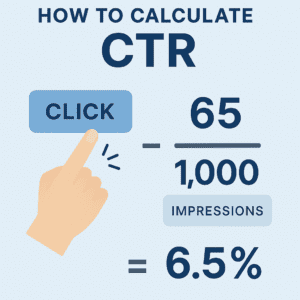
Now that you understand what CTR is and the definition of impression in CTR, let’s dive into the calculation of CTR. It’s a simple formula – you just divide the number of clicks on an ad by the number of impressions. This will give you a percentage that represents how often people are clicking on your ad after being exposed to it. Monitoring your CTR rates is essential to see how well your ads are performing and to make improvements over time. It’s also important to note that CTR is a core measurement in online advertising, and improving it can lead to better overall performance. So, now that you know how to calculate CTR, let’s move on to discussing how to improve it!
4. CTR rates monitoring
When it comes to online advertising, monitoring your click-through rate (CTR) is essential. As you’ve learned, CTR measures the number of clicks an ad receives compared to how many times it’s been viewed, or “impressions.” To monitor your CTR rates, you’ll need to keep track of the number of clicks and impressions over time. This will help you see if your ads are performing well or if they need tweaking. As a core measurement in online advertising, monitoring your CTR rates can help you optimize your campaigns and increase conversion rates. Keep an eye on your CTR regularly to ensure you’re getting the most out of your advertising efforts.
5. CTR as a core measurement in online advertising
As mentioned earlier, CTR is the ratio of the number of clicks on a specific link or call to action, and it is a crucial metric for evaluating the performance of digital campaigns. In fact, CTR is considered a core measurement in online advertising because it provides insights into the effectiveness of your marketing efforts. By analyzing your CTR, you can understand whether your ads are compelling enough to attract clicks and if they are driving the right kind of traffic to your website. By tracking your CTR over time, you can also identify trends and make continuous improvements to your advertising strategy. So make sure to monitor your CTR regularly and use it as a key metric to measure the success of your online advertising campaigns.
6. Frequency of people clicking on your ads
Now that you know what CTR is and how it’s calculated, let’s dive into the frequency of people clicking on your ads. This is an essential aspect of your online advertising campaign, as a high CTR means that your ad is attracting a significant number of clicks from your target audience. However, keep in mind that a low CTR means that your ad is not resonating with your audience, which can negatively impact your ad’s performance. To improve your CTR, consider testing different ad copy, images, targeting, and placement, and monitor your results to see what works best for your audience. Remember, achieving a high CTR is a critical metric in online advertising, but it’s only part of the story. To maximize your campaign’s success, you must focus on post-click behavior optimization, which means optimizing your post-click landing pages to ensure visitors take the desired action.
7. How to improve your CTR
Now that you understand what CTR is and why it’s important, let’s talk about how you can improve it. Including clear and compelling calls to action (CTAs) is crucial, as it prompts potential customers to take action and click through to your website. Additionally, optimizing your ad placement can impact your CTR. The higher your ad appears on the page, the more likely it is to catch someone’s eye and result in a click. It’s also essential to target your advertising to the right audience to increase the chance of them being interested in what you’re offering. By consistently monitoring and measuring your CTR, you can get a better sense of what’s working and what isn’t, and adjust accordingly. Overall, focusing on improving your CTR is an excellent way to generate more website traffic and increase your conversion rates.